Historic Manitou Avenue in Manitou Springs

Second Star Guide

Pikes Peak, Red Rocks, Manitou Springs

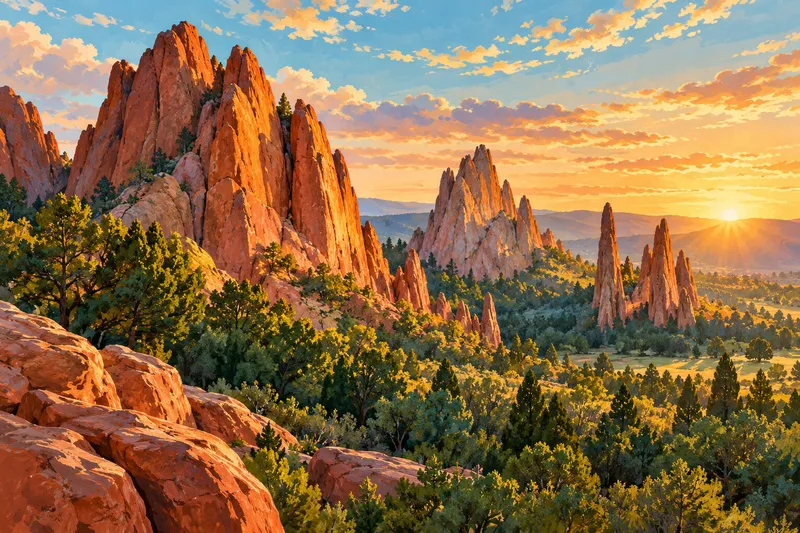
Stay among the mineral springs and Victorian storefronts, then ride the Cog Railway, climb the Incline, or walk among Garden of the Gods’ red sandstone fins.

Why start in Manitou

Eight mineral springs and a mountain at the end of the avenue

Manitou Springs grew as a nineteenth-century health resort around naturally carbonated water. Today the eight public springs, steep streets, old hotels, Penny Arcade, and Cog Railway depot give the town its own character at the foot of Pikes Peak.

The water that shaped the town

A taste of Manitou, one spring at a time

Long before Manitou became a resort, the springs were known to Indigenous peoples, including the Ute, Cheyenne and Arapaho. In the nineteenth century, visitors arrived seeking relief in the mineral waters; by the 1890s, grand hotels and boarding houses served the growing resort. The waters remain central to the town, not just a story behind glass.

Each spring has its own mineral taste. At Navajo Spring, the font is on the back outside wall of Patsy’s Candies, once a sampling room for the bottling works. Cheyenne Spring flows through a bronze font near its stone spring house; Twin Spring brings two sources into one drinking font. Bring a cup and compare them. The visitor bureau’s spring guide explains their histories and where to find a map.

Start at the Manitou Springs Heritage Museum on the east side of downtown, follow Manitou Avenue west toward the Penny Arcade and nearby fountains, then return along the avenue for the shops and galleries you passed. The museum’s exhibits cover the town’s water culture and railway history.

A resort town in miniature

A castle, a clock and a bottling empire

Look up at the town clock and you’ll see Hebe, the mythological cupbearer, above its face. Mining magnate and former Macy’s president Jerome Wheeler gave the clock to Manitou to celebrate his mineral-water bottling plant, which shipped the water beyond Colorado. It is a small monument to the ambitions of the spa era.

On the hillside, Miramont Castle offers a different view of Victorian Manitou. Built as a private residence in 1895, its locally quarried greenstone walls combine architectural styles from Tudor to Byzantine. Today it is a museum with self-guided rooms, local history and a fire department exhibit.

Games and mountain-town imagination

Penny Arcade and a most unusual race

The Penny Arcade spreads across several downtown buildings, mixing antique machines with pinball, Skee-Ball and later video games. It is an easy place to linger between the springs and the shops, whether your favorite game is a mechanical curiosity or Pac-Man.

Another piece of local history has become a spectacle: Emma Crawford came to Manitou seeking relief from tuberculosis and was buried on Red Mountain after her death. Years later, weather displaced her remains down the mountain. The town’s October coffin races commemorate the story; consult the visitor bureau for its history and current event information.

Where to stay

Downtown Manitou puts the avenue within walking distance; west Colorado Springs is convenient for parking and Garden of the Gods.

Rainbow Falls access

Rainbow Falls is closed for the season. Check the county’s current schedule and parking instructions before visiting.